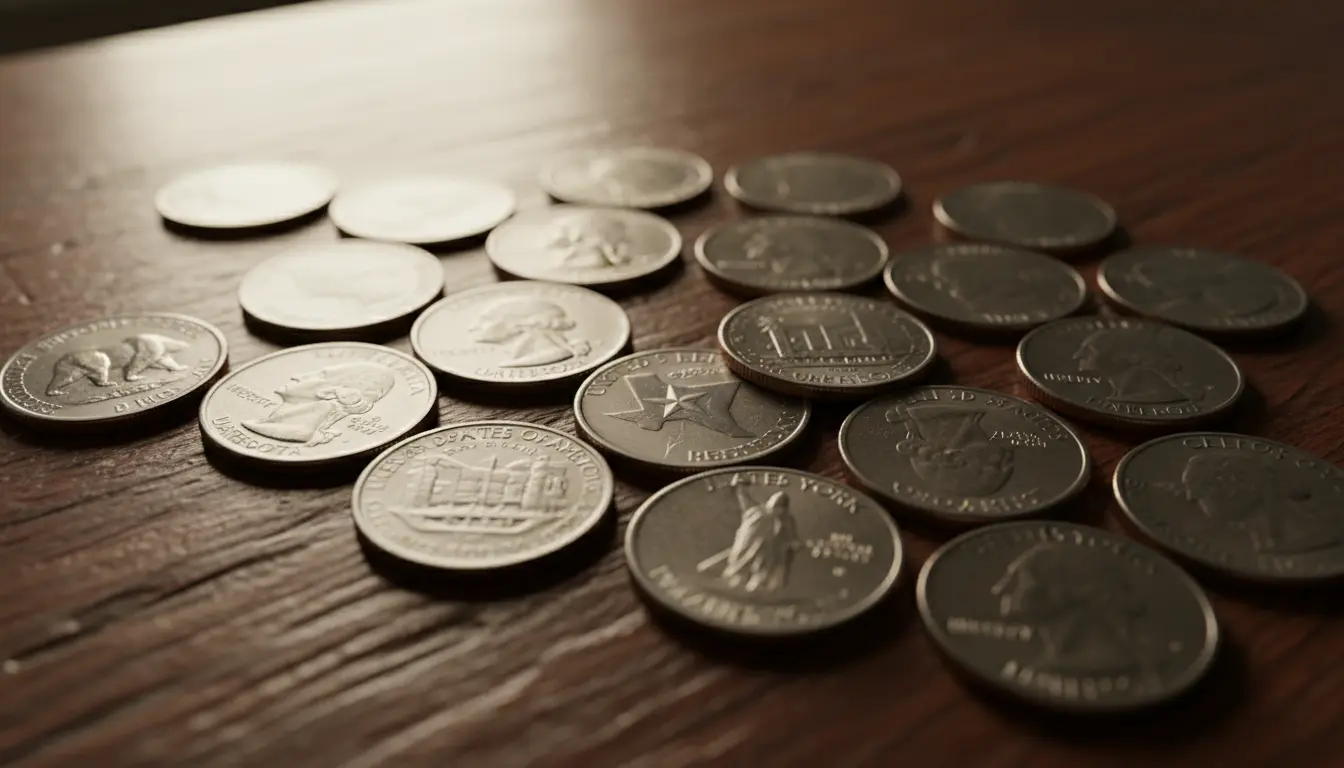
Seven State Quarters Worth Checking When You Count Your Change
State quarters were minted in large numbers, but a few varieties and mistakes can be worth far more than their face value. This guide explains seven types of state quarters that often carry premiums and shows how to spot and verify them.
How state quarters became collectible
The 50 State Quarters program ran from 1999 to 2008 and produced billions of coins. Most are common, but collectors prize errors, low-mintage issues, and high-grade proofs. Condition and rarity drive value more than the face design.
7 most valuable state quarters to watch
Below are seven coin types that can be valuable. Each entry explains what to look for and why collectors pay extra.
1. Wisconsin 2004 Extra Leaf varieties
The Wisconsin quarter is a well-known example because some 2004 releases show a tiny extra leaf near the corn stalk on the reverse. Two main varieties exist: the high extra leaf and the low extra leaf.
Why it matters: The extra leaf is a die variety that caught collector attention. Certified, high-grade examples can command significant premiums compared with common quarters.
2. Doubled die state quarters
Doubled die errors occur when a die impresses the design twice slightly offset. Look for doubled lettering, numerals, or details on the obverse and reverse.
Why it matters: Clear doubled die examples are scarce and popular with collectors. Values vary by how obvious the doubling is and coin condition.
3. Off-center strikes
Off-center strikes are coins where the design is not centered on the blank planchet. Mild misalignments are usually common, but larger off-center strikes that show a significant portion of the design missing are sought after.
Why it matters: The more off-center and well-preserved the coin, the higher the premium. Large off-center strikes in mint state condition can sell well at auction.
4. Clipped planchets and broadstrikes
Clipped planchets show a curved or straight missing portion on the coin edge. Broadstrikes appear larger because they escaped the collar during striking.
Why it matters: These minting irregularities are classic error types. Distinct, well-preserved examples can be collectible and worth more than face value.
5. Wrong metal or silver-clad rarities
Some state quarters appear on the wrong metal composition, for example on a silver-clad planchet instead of the standard copper-nickel. These errors are rare but happen.
Why it matters: Wrong planchet coins are uncommon and draw strong interest. Values depend on confirmation by a reputable grader and the specific metal involved.
6. Low-mintage or early-release varieties
Although most state quarters had high mintage, certain mint-marked runs or early-strike proof versions are scarcer. Coins with limited production at a specific mint can carry higher values.
Why it matters: Rarity by mintage is a straightforward driver of value. Even common designs can be worth more when tied to a low-mintage release or an early die state.
7. High-grade proof and mint-state specimens
Proof quarters and mint-state (uncirculated) pieces in very high grades are highly desirable. A coin with exceptional strike and no wear can be much more valuable than the same design in circulated condition.
Why it matters: Condition matters most in modern coin collecting. Grading by a recognized service (PCGS, NGC) regularly increases buyer confidence and price realization.
Key signs to spot a valuable state quarter
- Unusual marks or doubled letters
- Parts of the design missing or shifted (off-center)
- Extra elements near the design (like Wisconsin’s extra leaf)
- Unusual metal color or weight
- Exceptionally sharp detail with no wear
What to do if you find a potential rarity
Take these practical steps to confirm and protect the coin:
- Handle by the edges and avoid cleaning it.
- Compare with high-quality photos from reputable coin sites or guides.
- Weigh and measure the coin if you have precise tools.
- Consider getting a professional opinion from a coin dealer or local numismatic club.
- If the coin appears valuable, send it to a recognized grading service for certification.
Some error or variety coins were discovered only years after release because their differences are tiny. Small die varieties can be missed by casual inspection but still attract serious collectors when authenticated.
Real-world example
A buyer once found a Wisconsin 2004 quarter with the extra leaf while sorting change and posted a photo to an online forum. After having it examined and slabbed by a grading service, the coin sold at auction for several thousand dollars. The sale shows the importance of proper authentication and condition.
Final tips for coin hunters
Most state quarters are worth 25 cents, but examining your change carefully can pay off. Use a magnifier, learn common varieties, and when in doubt consult a professional. Certified coins sell best and receive the most trust from buyers.
With a little patience and the right eye, you could find a coin that is worth well above face value. Check your pockets and piggy banks — rare quarters do turn up in everyday change.