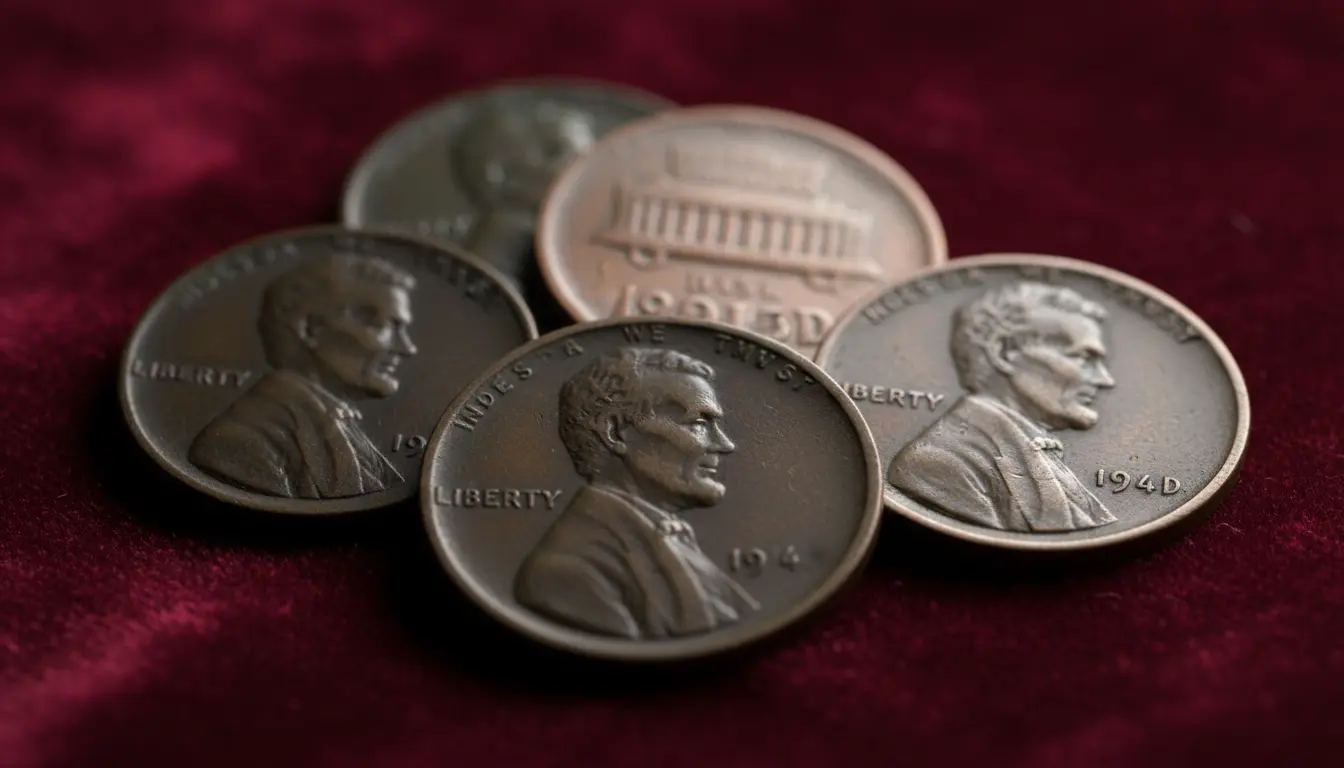
Overview of Rare Pennies of the Twentieth Century
This guide explains the most notable rare pennies struck during the 1900s and shows how to identify them. It focuses on common error types, key dates, and practical authentication tips for collectors and sellers.
Top 10 Rare Pennies of the Twentieth Century
Below is a concise list of the top 10 rare pennies from the twentieth century, with quick identification points and why each is sought after. Use the list to prioritize which coins to inspect in a collection or estate lot.
-
1909-S VDB Lincoln Cent
Notable for the V.D.B. initials on the reverse. Early Lincoln cents with the VDB initials or struck at the San Francisco mint are highly collectible due to limited early production and designer-credit controversy.
-
1909-S Lincoln Cent (no VDB)
San Francisco mint strikes from 1909 without the VDB initials are also scarce in higher grades. Look for sharp features and clear S mint mark below the date.
-
1914-D Lincoln Cent
This Denver mint issue had low mintage and is a common key date for Lincoln cent sets. Authentication and grade greatly affect value.
-
1922 Plain (No D) Lincoln Cent
Some 1922 cents lack the Denver mint mark due to weak striking or overpolishing, creating a “plain” 1922 that can command a premium when genuine.
-
1931-S Lincoln Cent
San Francisco 1931 cents are scarce, especially above circulated grades. Look for strong detail on Lincoln’s bust and the S mint mark.
-
1943 Bronze (Copper) Lincoln Cent
A wartime mistake, a few bronze planchets were struck in 1943 when steel cents were standard. These are very rare and must be authenticated by a reputable grading service.
-
1955 Doubled Die Obverse
This famous error shows a strong doubling of the date and motto on the obverse. It is one of the best-known doubled-die issues for mid-century collectors.
-
1969-S Doubled Die Obverse
Another doubled-die variety from San Francisco; authentic specimens are scarce and often heavily sought after by error-coin collectors.
-
1970-S Small Date Proof Varieties
Proof coins from this year exist in small-date and large-date variations, plus some proof errors that are scarce in high grade.
-
1974 Aluminum Test Strikes and Pattern Pieces
Not regular circulation issues, but trial strikes and patterns made for evaluation in the 1970s are rare and collectible when documented.
How to Identify These Rare Pennies
Identification begins with simple observation and progresses to verification. Use a loupe, good lighting, and reference guides or online databases for comparison.
- Check the mint mark and date location with a 10x loupe.
- Look for doubling, repunched mint marks, or missing mint marks (e.g., 1922 Plain).
- Note planchet color and weight—1943 copper cents will not be magnetic and are heavier than steel cents.
Authentication Steps
If you believe you found a rare penny, follow a simple authentication workflow to avoid mistakes and fraud.
- Document the coin with high-resolution photos of both sides.
- Compare to verified examples in trusted references or auction archives.
- Consult a reputable third-party grading service if the coin could be worth significant money.
Only a few dozen confirmed 1943 bronze cents are known to exist. These were accidental strikes on copper planchets when the Mint switched to steel for wartime material conservation.
Value Factors and Selling Tips
Rarity alone does not determine value. Condition, provenance, and market demand are equally important. High-graded certified examples attract the best prices.
- Grade: Higher grades increase value dramatically—market moves by grade bands (Good, VF, EF, AU, MS, PR).
- Provenance: Documented history or auction records support higher offers.
- Certification: Third-party grading (PCGS, NGC) reduces buyer hesitation and typically increases sale price.
Practical Selling Steps
When selling a rare penny, get multiple appraisals and consider auction houses for very high-value pieces. Local coin dealers are good for smaller finds and quick sales.
Small Case Study: Found in a Jar
A retired teacher sorted an old jar of coins and found a dull 1943 penny. Initial testing with a magnet suggested steel, but the coin did not stick. Photos were sent to an online forum where collectors suspected a bronze 1943 cent.
She sent the coin to a grading service. Results confirmed a 1943 bronze cent, and it sold at auction to a private collector. The seller used the payment to start a small numismatic collection for her grandson.
This case highlights simple steps: observe, test with a magnet, get community input, then use professional grading for high-value validation.
Final Tips for Collectors of Rare Pennies
Work methodically and keep good records. Even circulated coins can hide variety errors or key dates that are worth more than face value.
- Keep coins in individual flips and label date, mint, and source.
- Use reference books and reputable websites to compare images and descriptions.
- When in doubt, get a professional opinion before selling or restoring a coin.
With careful inspection and the right resources, many valuable twentieth-century pennies can be identified in existing collections. Prioritize authentication before making financial decisions.