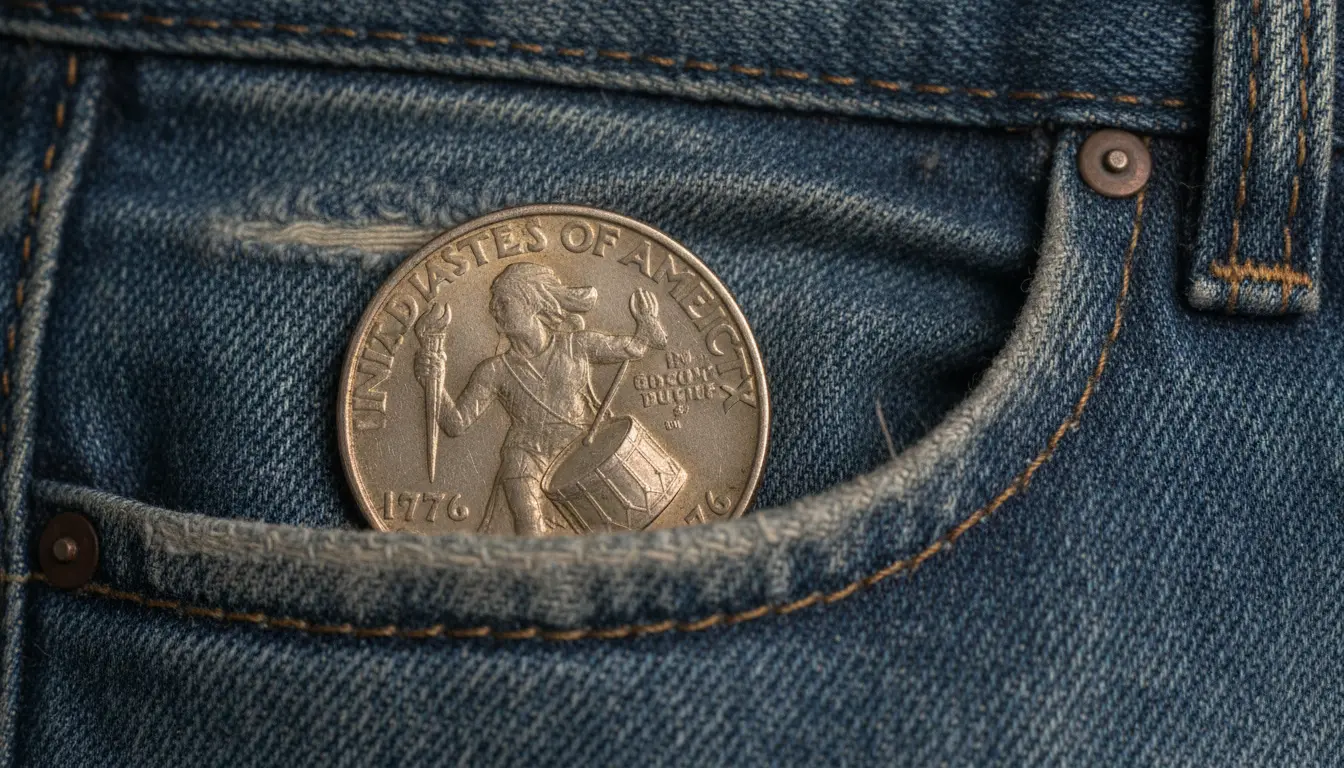
Understanding the rare Bicentennial quarter and the $5.1 million claim
Stories circulate that a rare Bicentennial quarter has an estimated value of $5.1 million and may still be found in everyday pockets. These headlines mix fact with speculation, so it is important to separate what is documented from what is unverified.
Collectors and auction records occasionally report extremely high valuations for unique coins, often based on rarity, condition, and historical significance. If you hear about a Bicentennial quarter with a $5.1 million valuation, treat that as a reported estimate rather than an absolute market fact.
How to identify a potentially valuable Bicentennial quarter
Most 1975–1976 Bicentennial quarters are common in circulation. A truly valuable specimen will usually have identifiable anomalies or an extremely high grade.
Look for these signs when examining a quarter:
- Date and design: Check for the dual date 1776–1976 on the obverse and the special Drummer Boy reverse. Counterfeit dates and altered coins exist, so be cautious.
- Mint mark anomalies: Missing mint marks, misplaced marks, or doubled mint marks can increase value. Note that most Bicentennial quarters were minted at Philadelphia (no mint mark), Denver (D), and San Francisco (S).
- Planchet and edge errors: Off-center strikes, clipped planchets, or unusual edge lettering may be significant.
- Metal composition: Genuine circulating quarters of that era are copper-nickel clad. Any sign of solid silver or different weight calls for testing.
Quick checklist: Things to examine
- Clear date 1776–1976 and Drummer Boy reverse
- Mint mark position and clarity
- Strike quality and centering
- Planchet and edge condition
- Weight and diameter compared to standard quarter
Step-by-step: What to do if you think you found the rare Bicentennial quarter
Finding a coin you suspect might be extremely valuable can be exciting and stressful. Follow practical steps to protect the coin and your interests.
- Do not clean the coin. Cleaning can damage patina and cut value dramatically.
- Handle by the edge and wear cotton gloves if possible to avoid oils from your skin.
- Take clear, well-lit photos of both sides, and note weight, diameter, and any peculiarities.
- Seek initial opinions from reputable coin dealers or local coin clubs before a formal appraisal.
- Get the coin certified by a recognized grading service (PCGS, NGC, or ANACS) for authentication and grading.
Authentication and grading: Why it matters
Professional certification confirms authenticity, documents any errors or varieties, and assigns a grade that strongly influences market value. For an unusual Bicentennial quarter, certification is essential.
Certified coins are easier to sell at auction or to serious collectors. If a coin were to approach an extreme valuation like $5.1 million, the documentation trail and expert consensus would be critical.
Where to get help: Trusted resources
Use reputable sources when seeking help. Avoid anonymous online buyers and social media valuations without proof.
- Local coin shops with established reputations
- Coin clubs and regional numismatic associations
- Professional grading services: PCGS, NGC, ANACS
- Auction houses that handle rare coins: Heritage Auctions, Stack’s Bowers, and similar firms
How much could a rare Bicentennial quarter actually be worth?
Most Bicentennial quarters are low-value coins for everyday use. Only a small subset with confirmed errors, unique provenance, or perfect uncirculated condition attract high collector interest.
Reported valuations vary widely and often depend on auction demand. If you discover a claimed $5.1 million valuation, look for published auction records, certification details, and expert commentary to support that figure.
Not every unusual coin is worth a fortune. Many supposed rarities gain attention online but lack the documentation to fetch high prices at auction.
Case Study: A small real-world example
A school teacher found a worn Bicentennial quarter in a tip jar and suspected it looked different. She did not clean the coin and instead photographed it and visited a local coin dealer for a first opinion.
The dealer found a minor mintmark doubling and suggested third-party grading. After certification, the coin sold to a private collector for several thousand dollars. While it was not a seven-figure sale, the owner received far more than face value and a secure sale process.
Practical tips for selling a rare Bicentennial quarter
If authentication confirms a valuable coin, consider these selling options and safeguards.
- Auction houses for maximum exposure and market-driven pricing
- Reputable dealers for quicker sales with established buyers
- Private sales with written agreements and escrow services for high-value transactions
- Always require proof of funds and use secure payment methods
Final guidance: Be cautious and documented
Claims about a Bicentennial quarter valued at $5.1 million make great news, but they require evidence. Treat headlines as a reason to investigate, not proof.
Protect the coin, document everything, and rely on established numismatic experts for authentication and sale. With the right steps, a pocket find can become a verified treasure or a pleasant surprise that still pays well above face value.