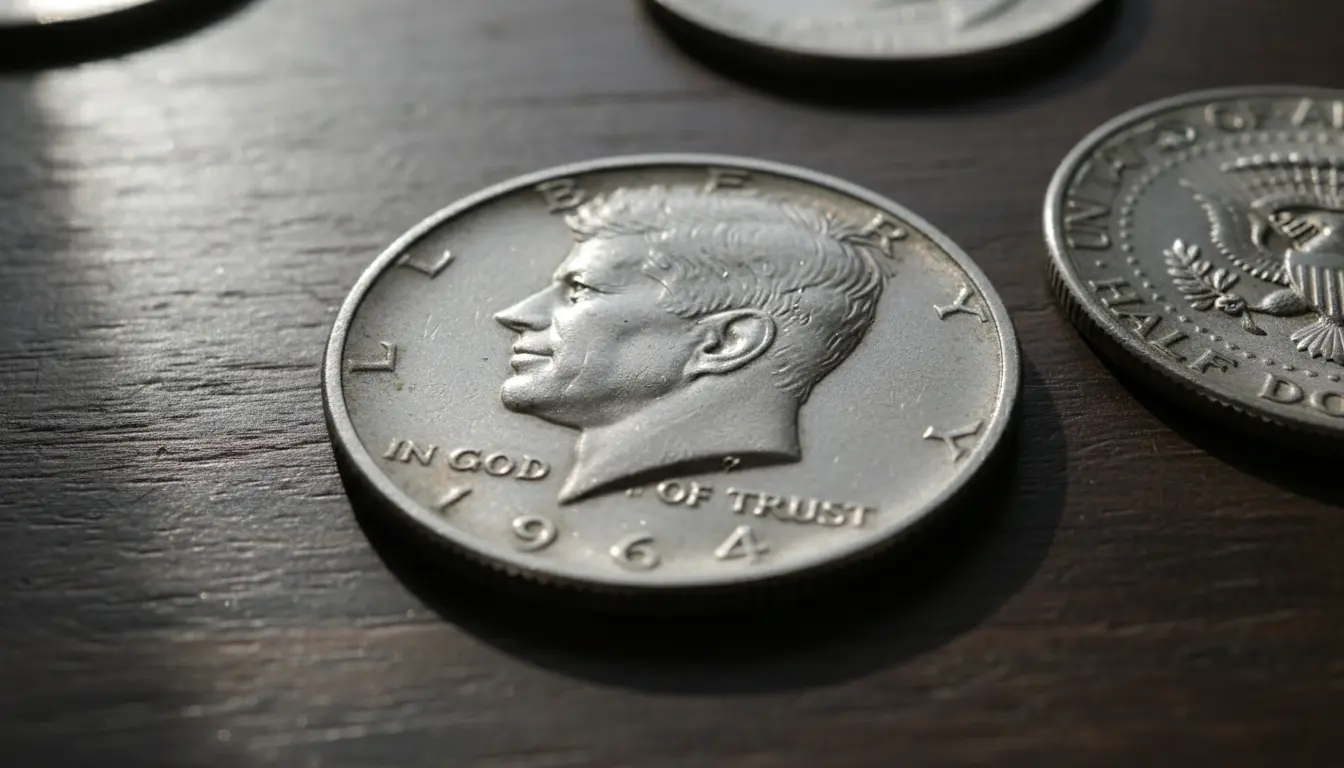
Why collectors are talking about a Kennedy Half Dollar valued at $5.9 million
News that a Kennedy Half Dollar could be valued at $5.9 million has stirred interest across the coin-collecting world. Whether the story is accurate or amplified, the headlines raise a useful question: how do you know if a Kennedy Half Dollar in your possession might be exceptionally valuable?
How rare Kennedy Half Dollars gain extreme value
Most Kennedy Half Dollars from the 1960s onward are common and worth modest amounts based on silver content or condition. A coin jumps into the millions when one or more of the following apply: extreme rarity, a dramatic minting error, or unique historical provenance.
Key factors that can drive value
- Scarcity — very few examples known or a one-of-a-kind variety.
- Minting errors — large off-center strikes, planchet mix-ups, or major die mistakes.
- High grade — flawless (MS/PR 67–70) examples are far more valuable.
- Verified provenance — coins tied to famous collections or historical events.
- Certified authenticity — professional grading by NGC or PCGS.
Steps to check your Kennedy Half Dollar
Follow a straightforward process to assess whether your coin might be special. Each step helps rule out common, low-value pieces and identifies attributes that might merit a professional appraisal.
1. Examine visible marks and the date
Look for the date and any mint mark on the obverse or reverse, depending on series. Note wear, unusual letters, doubling, or missing elements. Photography under good light helps document details.
2. Search for clear errors
Common high-value errors include off-center strikes, clipped planchets, incorrect planchet metal, or striking over another coin. These errors are more valuable the more dramatic and verifiable they are.
3. Judge the condition
Use a loupe or magnifier. Sharp, uncirculated devices, luster, and absence of contact marks push a coin toward higher grades. If it looks near-perfect, consider professional grading.
4. Compare to reference sources
Check auction records, reference books, and reputable dealer listings. For any unusual attribute, search for similar listings at auction houses and collector databases to get a price range.
How to verify authenticity and value
When a coin could be extremely valuable, verification is essential. Never accept a high valuation without certification from respected entities in numismatics.
Get professional grading
Submit the coin to a major grading service such as PCGS or NGC. Grading provides an objective condition score and authentication. For high-value pieces, the grading report is critical to attracting serious buyers.
Use trusted appraisers and auction houses
Consult established coin dealers or major auction houses. They can provide provenance research, market context, and—if warranted—handle a sale. Avoid speculative offers from unknown buyers.
Practical tips if you think you have a rare Kennedy Half Dollar
- Do not clean the coin. Cleaning can destroy value and leave visible damage.
- Photograph the coin from multiple angles with scale reference.
- Store it securely in acid-free flips or a coin capsule to prevent damage.
- Get multiple opinions from reputable numismatists before selling.
Some Kennedy Half Dollar varieties were produced in very small numbers for proofs or experimental strikes. These special runs can be far more valuable than regular business strikes when verified and graded.
Case study: A cautious path from discovery to auction
A collector found an odd Kennedy Half Dollar while sorting an inherited box of coins. The date was clear but the reverse showed an unusual doubling. Instead of selling immediately, the collector documented the coin with photographs and sought opinions from two local dealers.
Both dealers recommended grading. The coin was submitted to a major grading service, which authenticated a rare doubled-die variety and assigned a high grade. The owner consigned the coin to a reputable auction house where it sold to a specialist buyer. The process took months, but proper steps maximized the final result.
What to watch out for in high-value claims
Headlines about a Kennedy Half Dollar valued at $5.9 million are attention-grabbing, but they require verification. Look for documentation such as a grading certificate, auction record, and provenance chain before accepting the claim.
Red flags
- No grading or poor-quality photos.
- Anonymous sellers or buyers insisting on secrecy.
- Offers well below established auction prices or pressure to accept a quick private sale.
Final checklist if you find a Kennedy Half Dollar you think is valuable
- Do not clean or alter the coin.
- Photograph and document the coin carefully.
- Seek opinions from reputable dealers or collectors.
- Get professional grading and authentication.
- Use established auction houses or trusted dealers to sell.
Whether or not the story of a Kennedy Half Dollar valued at $5.9 million applies to your coin, the same careful verification and documentation steps will help you determine true market value. If you think you might have a rarity, take the verification route—proper authentication preserves and unlocks real value.