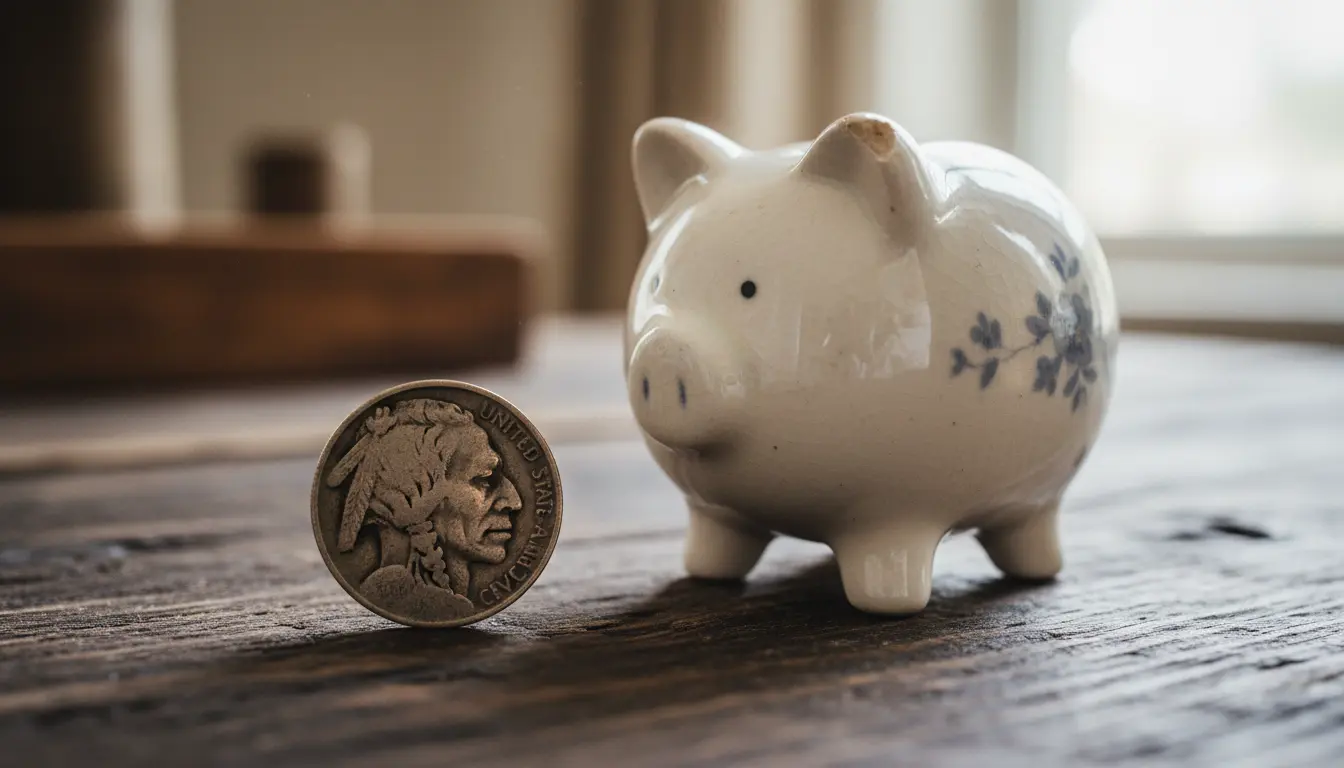
Finding a Buffalo Nickel That Sat in a Piggy Bank for 30 Years
Discovering an old Buffalo nickel after decades in a piggy bank can be exciting and confusing. Most of these coins are common, but some dates and errors are collectible.
Why a Buffalo Nickel Might Be Worth More
The Buffalo nickel was produced from 1913 to 1938 and includes design changes and mint marks that affect value. Rarity, condition, and errors can raise interest from collectors and dealers.
However, many coins that sat loose in piggy banks show wear, nicks, or cleaning damage that reduces market value. The first step is a calm, careful inspection.
Key factors that affect value for a Buffalo Nickel
- Date and mint mark (look under the Indian’s braid and on the reverse lower-right for marks).
- Overall condition: sharp detail and minimal wear increase interest.
- Errors and varieties, such as doubled dies or struck-through debris.
- Whether the coin has been cleaned or altered; cleaning usually reduces collector value.
How to Inspect the Buffalo Nickel You Found
Handle the coin carefully to avoid adding scratches or fingerprints. Hold it by the edge and work on a clean, soft surface.
Step-by-step inspection
- Use a loupe or magnifier to read the date and check the mint mark. Dates can be faint on worn examples.
- Look at high points: Indian cheekbone and buffalo horn detail. Heavy wear here usually means low grade.
- Check for cleaning signs: hairline scratches, unnatural shine, or chemical discoloration.
- Search for obvious errors or varieties that are known to collectors. When in doubt, photograph the coin for later reference.
What To Do Next With a Buffalo Nickel That Sat in a Piggy Bank for 30 Years
If the coin appears ordinary, you may hold it as a keepsake or spend it, but if it shows a readable date and mint mark, consider these options.
Practical steps
- Don’t clean the coin. Cleaning can permanently harm value.
- Take crisp photos under natural light for reference and online opinion posts.
- Compare your coin to trusted references such as coin guides or professional websites.
- Get a second opinion from a local coin dealer or a numismatic club before selling.
Where to Get an Official Opinion or Sell
Choose the path that fits your goals. If you want top market value, consider third-party grading. If you prefer quick cash, a local dealer may offer an immediate sale.
Common selling and appraisal routes
- Local coin dealers: quick, convenient, good for common coins and small premiums.
- Coin shows and numismatic clubs: useful for networking and free opinions.
- Online marketplaces and auction houses: best for rare pieces but require photos, listing effort, and buyer fees.
- Third-party grading services: submit if you suspect the coin is rare or of high grade.
Common Mistakes to Avoid
Many sellers hurt a coin’s value by rushing or doing the wrong thing. Avoid these common errors.
- Do not scrub or use chemicals to brighten the coin.
- Don’t assume an old coin is rare without checking date and mint mark.
- Beware of high-pressure “we buy gold” or quick-buck offers that underpay collectible coins.
Short Case Study: A Real-World Piggy Bank Find
Sarah emptied a ceramic piggy bank that had sat in a closet for 30 years. She found several Buffalo nickels among loose change and followed a careful process.
- She photographed each coin and used a magnifier to read dates and mint marks.
- One coin showed a readable date and a distinct mint mark; she did not clean it.
- Sarah consulted a local dealer and an online collector forum. The consensus was that her coins were common but collectible in uncleaned circulated condition.
- She sold a few duplicates to the dealer for a modest premium and kept one nicer coin as a memento.
This example shows that clear documentation and measured steps lead to better outcomes than rushing to sell or cleaning coins at home.
Summary: Practical Tips for Your Buffalo Nickel
Finding a Buffalo nickel that sat in a piggy bank for 30 years is an opportunity to learn and possibly recover value. Start with careful handling, inspection, and documentation.
If the coin looks uncommon, seek professional advice before taking action. For most finds, sensible steps and a little research will give you the best results.