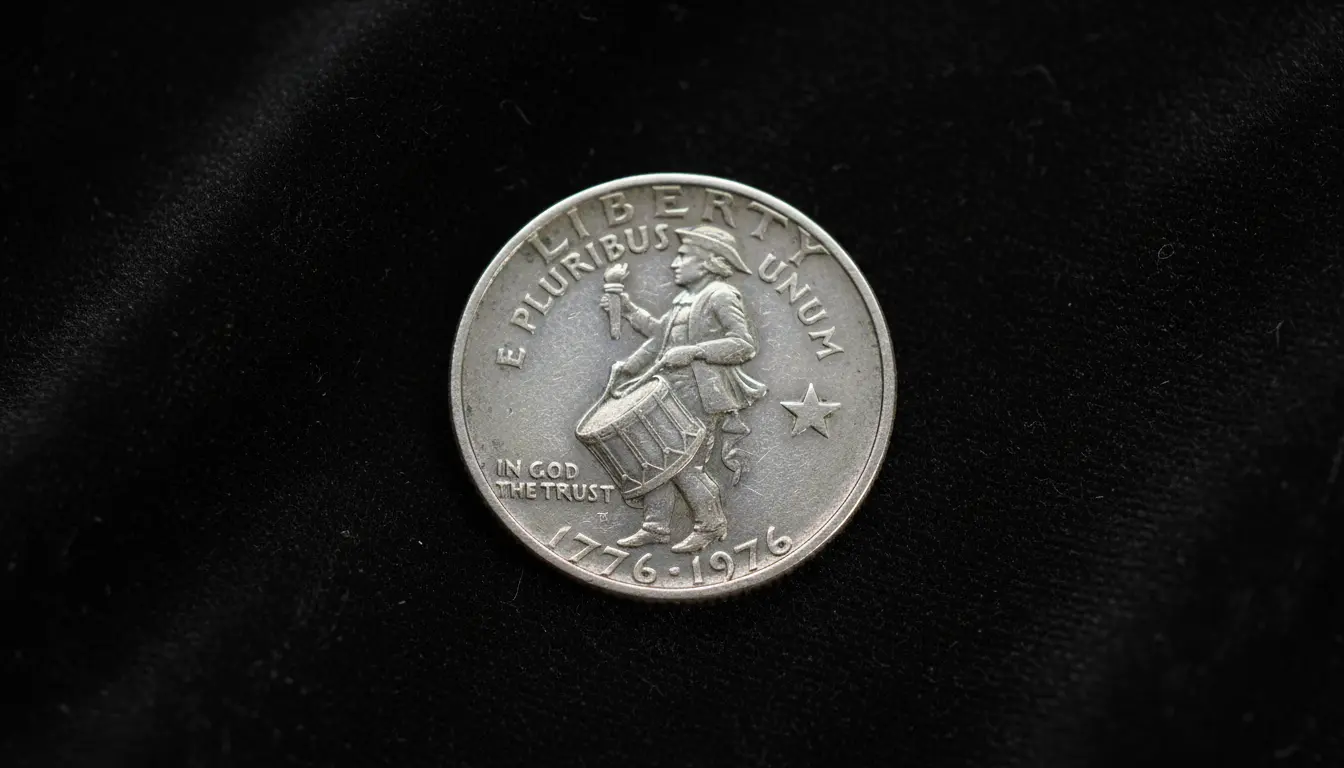
The 1776–1976 Bicentennial quarter is common in pockets and collections, but a few examples are genuinely scarce and collectible. This guide explains how to spot those rare pieces, what features to check, and how to estimate value without specialist equipment.
What is the Rare 1776–1976 Bicentennial Quarter?
The Bicentennial quarter was issued for the United States’ 200th anniversary and bears the dual date 1776–1976. Most were produced for circulation, but collectors should know which varieties can be more valuable.
Key things to remember: most are common clad coins, while specific mintings, silver pieces, and error coins can be rare and worth more.
How to identify a Rare 1776–1976 Bicentennial Quarter
Identification starts with visual inspection, mint marks, and understanding composition. Work slowly and compare with reliable references.
Obverse and reverse features
On the obverse you’ll see the Washington portrait. The reverse shows a colonial drummer and a victory torch inside a spoked wheel, designed especially for the Bicentennial.
Look for sharpness of detail, strike quality, and any unusual surface features that differ from standard examples.
Mint marks and where they matter
Mint marks appear on many Bicentennial quarters. Philadelphia examples have no mint mark, Denver pieces have a D, and San Francisco pieces typically have an S.
San Francisco proofs or special silver pieces may be worth more than standard Denver or Philadelphia circulation strikes, especially in high condition.
Composition: clad vs 40% silver
Most circulating Bicentennial quarters are copper-nickel clad. However, the U.S. Mint produced a limited number of 40% silver Bicentennial quarters for collector sets.
Silver 40% pieces are usually found in proof or uncirculated mint sets and are heavier and different in sound and color than clad coins.
Error and variety indicators
Error coins and unusual varieties can be rare. Common errors to check for include off-center strikes, clipped planchets, severe doubling, and die cracks.
- Off-center strikes: part of the design missing due to misaligned planchet.
- Clipped planchets: a flat curved area where metal was missing.
- Die breaks or cracks: raised lines on the coin surface from damaged dies.
- Doubling: repeated elements like doubled letters or dates from die misalignment.
Tools and quick tests for identification
You can do basic checks at home with inexpensive tools. These methods won’t replace professional grading, but they help you shortlist coins worth further attention.
- Magnifier (10x): inspect for die cracks, doubling, and fine details.
- Digital scale: 40% silver quarters weigh slightly more than clad ones (use a precise scale to compare).
- Magnet: coins are non-magnetic; a sticking magnet suggests contamination or a counterfeit.
- Sound test: a light ring test can indicate metal type—silver rings differently than clad metal.
Estimated value and what affects price
Value depends on rarity, condition, and silver content. Most circulated Bicentennial quarters are worth face value or slightly above to collectors.
Higher values appear for:
- 40% silver proofs and uncirculated pieces from mint sets.
- Well-documented error coins (major off-center strikes, large planchet errors).
- High-grade coins with full, original mint luster.
The Bicentennial coin reverse was designed by Jack L. Ahr and replaced the usual eagle on the quarter only for the 1975–1976 issue. The dual date 1776–1976 is unique to this release.
Case study: Finding a silver Bicentennial quarter in a collection
A collector examined a box of inherited coins and found several Bicentennial quarters. Using a magnifier and a small digital scale, they identified one heavier coin and a sharp S mint mark.
After confirming the 40% silver composition (by weight and professional opinion), the collector took the coin to a local dealer. The piece was identified as a silver proof from a mint set and sold or traded at a modest premium due to condition and market demand.
When to consult a professional
If a coin shows major errors, an unusual weight, or exceptional condition, get a second opinion. Professional grading services can provide certification that increases buyer confidence and market value.
Use dealers with good reputations or independent grading services like PCGS or NGC for high-value items.
Practical steps to follow if you think you have a rare Bicentennial quarter
- Handle the coin by its edges to avoid fingerprints and oils.
- Use a magnifier and compare to photos from reliable references or Mint documentation.
- Weigh the coin on a precise digital scale to check for silver composition.
- Document the coin with clear photos and notes about mint marks and errors.
- Consult a reputable dealer or submit the coin for third-party grading if it appears rare or valuable.
With careful inspection and a few simple tools, you can separate common Bicentennial quarters from the few hidden treasures. Most coins will be common, but the right mint mark, silver content, or error can make a quarter worth keeping or having professionally evaluated.