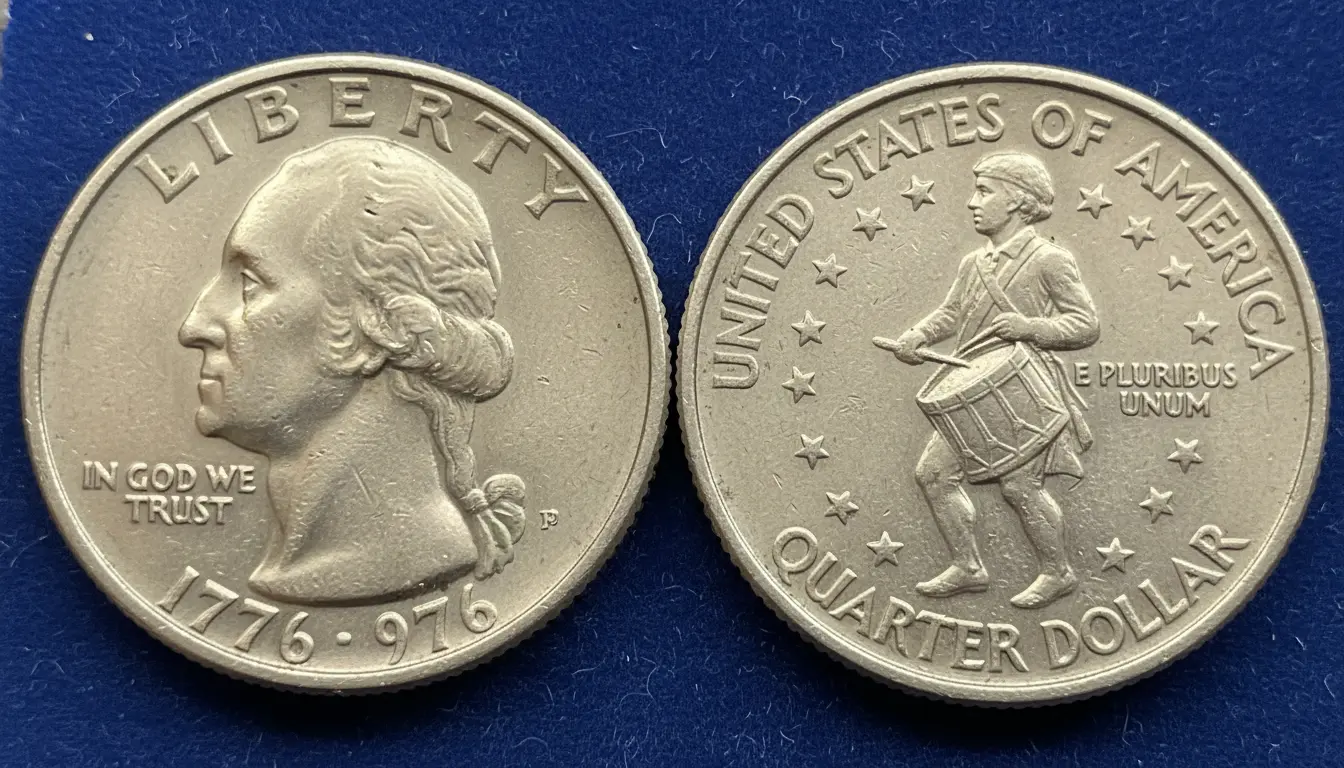
Understanding the Rare Bicentennial Quarter Worth $3.76 Million
Stories of a Bicentennial quarter valued at $3.76 million have circulated online and in collecting forums. These claims usually refer to a very rare error, unique strike, or an exceptional proof that collectors prize.
It is important to treat single high-value reports with caution. A reported valuation does not always equal a confirmed auction sale, and provenance plus grading drive real market value.
Is It Still in Circulation?
Most Bicentennial quarters (dated 1776-1976) were common and used in everyday transactions. The vast majority of these coins remain in banks, piggy banks, and change jars.
Extremely rare varieties or well-preserved proof and silver pieces are unlikely to be in circulation. If a genuine multi-million-dollar example exists, it would almost certainly be in a private collection or a museum.
How rare high-value coins typically appear
High-value Bicentennial quarters usually fall into one of these categories:
- Error strikes (off-center, wrong planchet, double strike)
- Unique die varieties or proof anomalies
- Exceptionally high grade pieces (MS/PR 68–70) with perfect surfaces
- Coins with documented historical provenance
How to Check If Your Bicentennial Quarter Is Valuable
Use a measured approach when evaluating a potential rarity. Follow these practical steps to avoid misinformation or scams.
Step-by-step inspection
- Look for the date 1776–1976 on the obverse and the bicentennial reverse with the drummer and torch motif on the back.
- Check the mintmark: D for Denver, S for San Francisco, or no mintmark for Philadelphia pieces. S proofs are often more valuable, especially in silver.
- Examine the coin under 10x–20x magnification for doubling, die cracks, or unusual planchet characteristics.
- Weigh the coin. Authentic clad quarters weigh about 5.67 grams. Silver 40% proof pieces will weigh differently and measure differently in diameter and thickness.
- Compare to reference guides (PCGS, NGC, Krause catalogs) and online databases for known varieties and error types.
Red flags and common pitfalls
- Photos without clear provenance or certification
- Unrealistic private sale claims with no auction record
- Unscrupulous buyers offering low upfront and high “fees” later
Authentication and Grading
If you believe you have an unusually valuable Bicentennial quarter, professional grading is the next critical step. Reputable third-party graders provide authentication, grade, and encapsulation.
Where to get your coin graded
- PCGS (Professional Coin Grading Service)
- NGC (Numismatic Guaranty Corporation)
- ANACS (American Numismatic Association Certification Service)
Submit high-quality photos and any provenance when possible. Expect fees, submission times, and insurance costs for shipping and grading.
Selling a High-Value Bicentennial Quarter
Once authenticated, selling options vary depending on the market and how quickly you want to sell. High-value coins typically achieve best prices at reputable auctions with proper marketing.
Selling channels and pros/cons
- Auction houses (Heritage, Stack’s Bowers): best for maximum exposure and competitive bidding
- Specialist dealers: quicker sale but often lower net return after commission
- Private sale to an established collector: can be discreet and fast with negotiated terms
Real-World Example: How a Collector Confirmed a Valuable Coin
A collector found a worn Bicentennial quarter in a jar of inherited coins and suspected it was unusual due to a heavy doubling on the obverse. They followed these steps to confirm value:
- Documented the coin with macro photos under consistent lighting.
- Compared images to error coin references online and in printed catalogs.
- Sent the coin to a third-party grading service for authentication and grading.
- Placed the graded coin with a major auction house on consignment after receiving expert verification.
The process took several months, but authentication was essential to achieving a fair market price and avoiding disputes over authenticity.
Bottom Line: Could a Bicentennial Quarter Really Be Worth $3.76 Million?
It is possible for a coin with unique attributes, impeccable grade, and clear provenance to reach extraordinary prices. However, a multi-million-dollar sale requires strong, independently verified evidence such as auction records and third-party certification.
If you find a Bicentennial quarter you think is rare, document it, get it authenticated, and consult reputable auction houses or dealers. That is the safest path to confirming whether your coin is truly exceptional.
Quick checklist
- Inspect the coin carefully with magnification
- Weigh and measure the coin to check composition
- Consult reference guides and online databases
- Get third-party grading and authentication
- Contact reputable auction houses or specialist dealers
Following these practical steps will help you separate viral claims from verifiable rare coins. If your coin turns out to be the real thing, proper documentation and professional handling will maximize its value.